
How Long Does Home Rooftop Solar Installation Really Take in India?
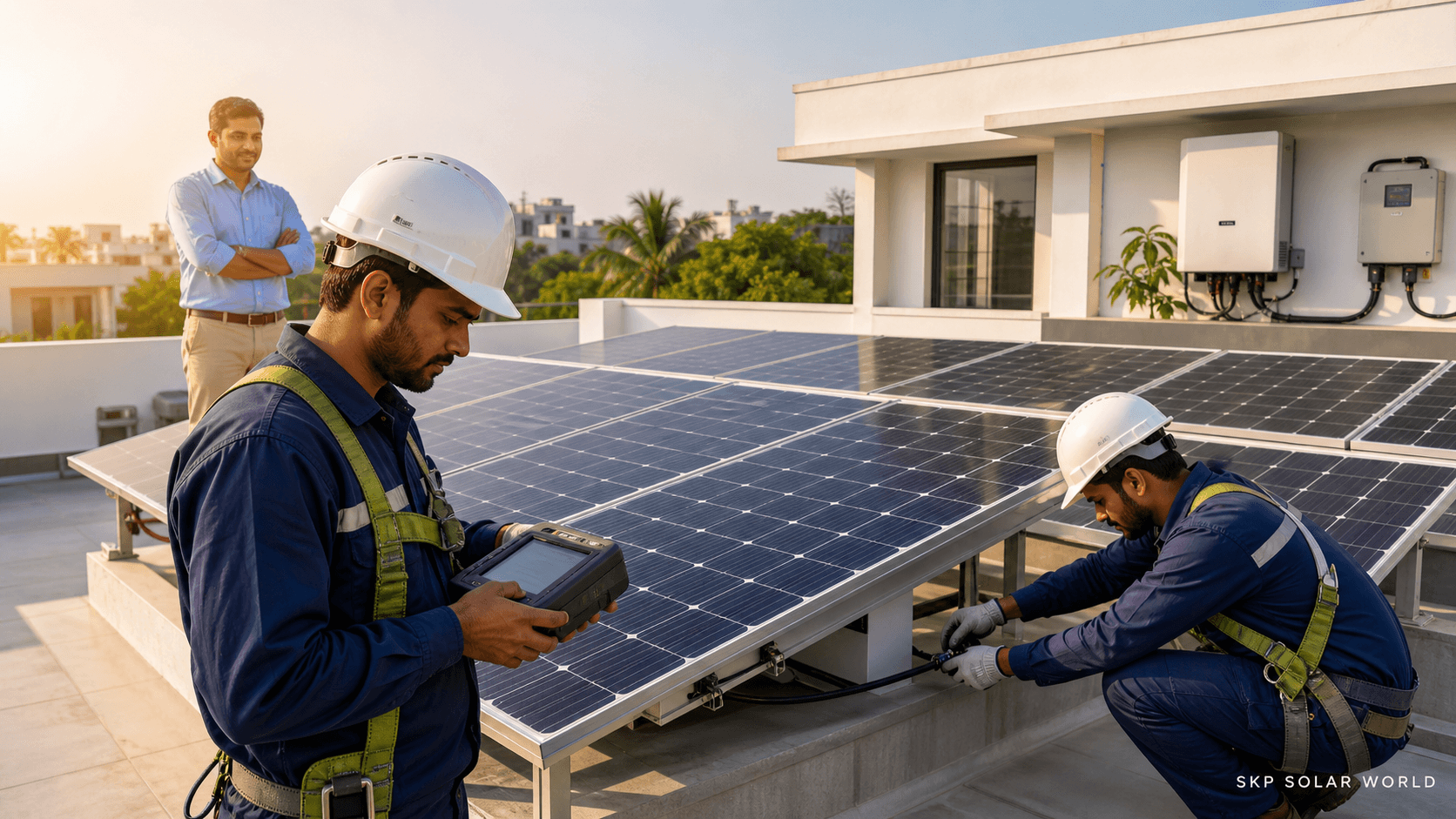
A straightforward home rooftop solar installation in India typically takes 3 to 6 weeks from signed agreement to a working, grid-connected meter, though the on-roof mounting and wiring itself is usually finished within 1 to 3 days.
A Home Solar Boom That Outpaced the Explanations
Home solar in India has moved from a slow-adoption category to one of the fastest-growing home upgrades in the country, and the pace is still climbing. Under the PM Surya Ghar Muft Bijli Yojana, the daily rate of new rooftop installations accelerated roughly 3.2 times in nine months, rising from about 5,038 installations a day in October 2025 to nearly 16,328 a day by July 2026, with July 2026 alone adding 506,000 new rooftop systems nationwide. The scheme crossed 50 lakh (5 million) household installations and 14.8 GW of cumulative capacity in just over two years, compared with only 794,000 rooftop installations added across the entire decade before the scheme existed. That surge is part of a much larger shift in solar power in India, but the national numbers say nothing about what a single household should expect once they sign a contract.
The Real Question Isn't "How Long," It's "Where the Time Goes"
For most homeowners, the national growth story does not answer the question that actually matters before signing: how many days will workers be on the roof, how many separate visits will there be, and when will the electricity bill actually change. That uncertainty, more than the upfront cost, is what causes many households to delay a decision for months even after they have already concluded that solar makes financial sense for their home.
What Actually Happens Between Signing and Switch-On
A home rooftop installation is not one continuous job. It is a sequence of shorter steps, each with its own timeline, and delays almost always happen between steps rather than during the physical work itself.
- Site survey and structural check. A technician assesses roof strength, shading, orientation, and usable area. This is usually a single visit, with findings shared within a few days.
- System design and material procurement. The installer finalizes system size and orders the specific photovoltaic panels and inverter for the home. Timing here depends heavily on whether the exact models are in stock.
- Mounting, wiring, and inverter installation. The actual on-roof work for a typical home system generally takes 1 to 3 days, not weeks.
- Net metering application to the DISCOM. This net metering application legally connects the system to the grid and allows surplus power to be exported. MNRE has directed DISCOMs to clear these applications within 15 days.
- Inspection and meter replacement. The DISCOM swaps the existing meter for a bidirectional meter that can record both consumption and export.
- Commissioning and subsidy processing. Once commissioned, eligible central subsidy amounts are directed to be credited within 30 days of installation under current MNRE guidance.
Why Some Installations Drag Into Months, Not Weeks
As renewable energy in India scales past 132.85 GW of total installed solar capacity, with grid-connected rooftop systems accounting for 23.16 GW of that as of November 2025, DISCOM offices in high-demand areas are processing far more applications than they were originally built to handle. A homeowner rarely sees this backlog directly. What they see instead is a net metering application that sits unanswered past the 15-day window, a technical inspection that gets rescheduled, or a subsidy credit that takes longer than the 30 days it is supposed to. In most cases, the underlying cause is one of a small set of avoidable problems: incomplete documentation submitted at the first attempt, an installer who is not empanelled or not experienced with that specific DISCOM's portal, panel or inverter models that were quoted but were not actually in stock, or a structural issue on the roof that only gets discovered after the contract is signed instead of before.
What a Smart Buyer Should Look For Before Signing
The gap between a 4-week installation and a 4-month installation is rarely about the technology. It is almost always about process discipline before the first panel goes on the roof. Before signing with any installer, it is worth confirming:
- A written, day-by-day schedule from site survey to commissioning, not a vague estimate like "2 to 4 weeks."
- A demonstrated track record with your specific DISCOM's net metering process, not just general installation experience.
- A structural assessment completed and shared with you in writing before the contract is finalized, not discovered afterward.
- Confirmed panel and inverter stock at the time of signing, with the exact model, capacity, and warranty terms documented.
- A single point of contact who manages the utility paperwork on your behalf, rather than leaving you to follow up with the DISCOM yourself.
- A quotation with clearly itemized, GST-inclusive pricing, so the number you sign is the number you actually pay.
Where SKP Solar World Fits Into This Timeline
This is the exact set of questions SKP Solar World built its residential process around: a documented site survey, a written schedule shared before work begins, and an in-house team that manages net metering paperwork directly with the local DISCOM instead of leaving homeowners to chase it themselves. Because design, supply, and installation sit under one roof rather than being split across a salesperson, a subcontractor, and a separate paperwork agent, there are fewer handoffs, and fewer handoffs generally means fewer weeks lost. Homeowners evaluating a rooftop system can request a site feasibility assessment to get a realistic, roof-specific timeline before committing to any installer.
Before deciding on a system size or a vendor, it is worth comparing your current monthly electricity bill against what a correctly sized rooftop system would realistically save you. Compare your current electricity bill with a projected solar savings estimate at skpsolarworld.com to see where your household stands and what a realistic, week-by-week installation timeline would look like for your specific roof.
Frequently Asked Questions
How many days does the actual rooftop work take at my house?
For a typical home system, the physical mounting, wiring, and inverter installation usually takes 1 to 3 days. The rest of the multi-week timeline is site survey, procurement, and DISCOM paperwork, not on-roof labor.
Does the government's 15-day net metering rule always work in practice?
MNRE has directed DISCOMs to process net metering applications within 15 days, and this has meaningfully shortened wait times nationally. In practice, the timeline still depends on the completeness of the application and how busy the local DISCOM office is, which is why a well-prepared, complete application matters as much as the rule itself.
Can I speed up my rooftop solar installation?
The two biggest levers a homeowner controls are choosing an installer with a proven track record on your specific DISCOM's net metering process, and confirming that panel and inverter stock is actually available before signing, rather than discovering a backorder mid-project.
Will my electricity be off during installation?
A short supply interruption is typically needed only when the DISCOM swaps your existing meter for a bidirectional net meter, and this is usually a matter of hours, not days.
What should I check before hiring an installer for my home?
Ask for a written day-by-day schedule, proof of experience with your local DISCOM, confirmed stock for the exact panel and inverter models quoted, and an itemized, GST-inclusive price. A free feasibility check before signing is a reasonable request from any serious installer.
Sources
- PM Surya Ghar rooftop solar scheme surpasses 5 million households, pv magazine India, August 2026
- PM Surya Ghar: Muft Bijli Yojana, Press Information Bureau, Government of India
- MNRE Directs DISCOMs to Reduce Application Process for Rooftop Solar, Mercom India
- India surpasses 132 GW of installed solar capacity: MNRE, pv magazine India, December 2025
Ready to Explore Solar for Your Property?
Model your own numbers in two minutes, or have an SKP engineer walk your roof and give you the conservative version.
You May Also Like
 Residential Solar
Common Myths About Home Solar in India: What the Data Actually Shows
Monsoon shutdowns, high cost, fast degradation, impossible paperwork: the most common myths about home rooftop solar in India, checked against 2026 data from CEEW, MNRE, Mercom and PM Surya Ghar.
Read Article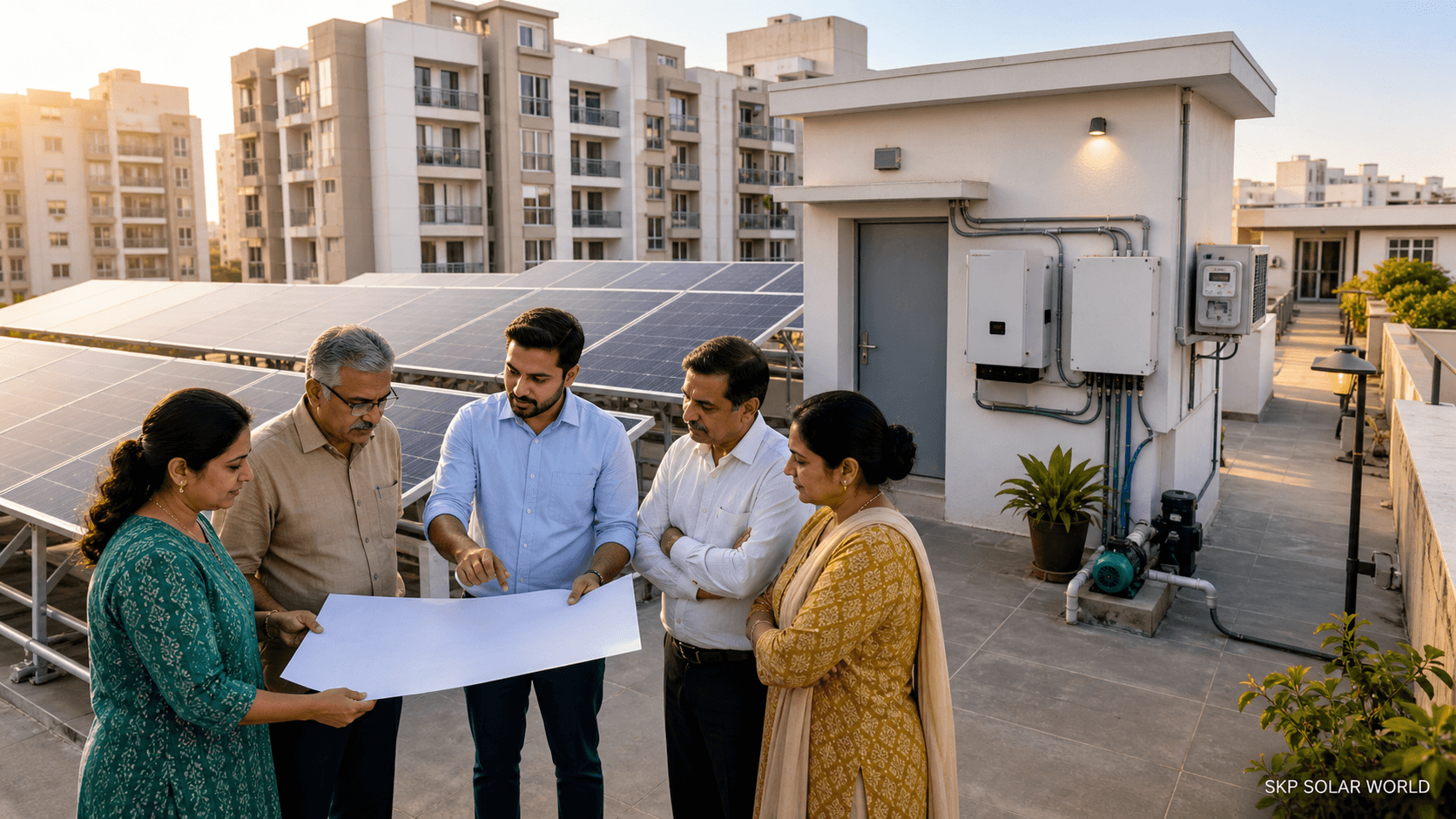 Residential Solar
Solar for Apartments and Housing Societies in India: Making Shared Rooftops Work for Every Resident
Yes, apartment complexes and housing societies in India can install rooftop solar for shared spaces such as lifts, water pumps, corridors, and common lighting, using a mechanism called group net metering.
Read Article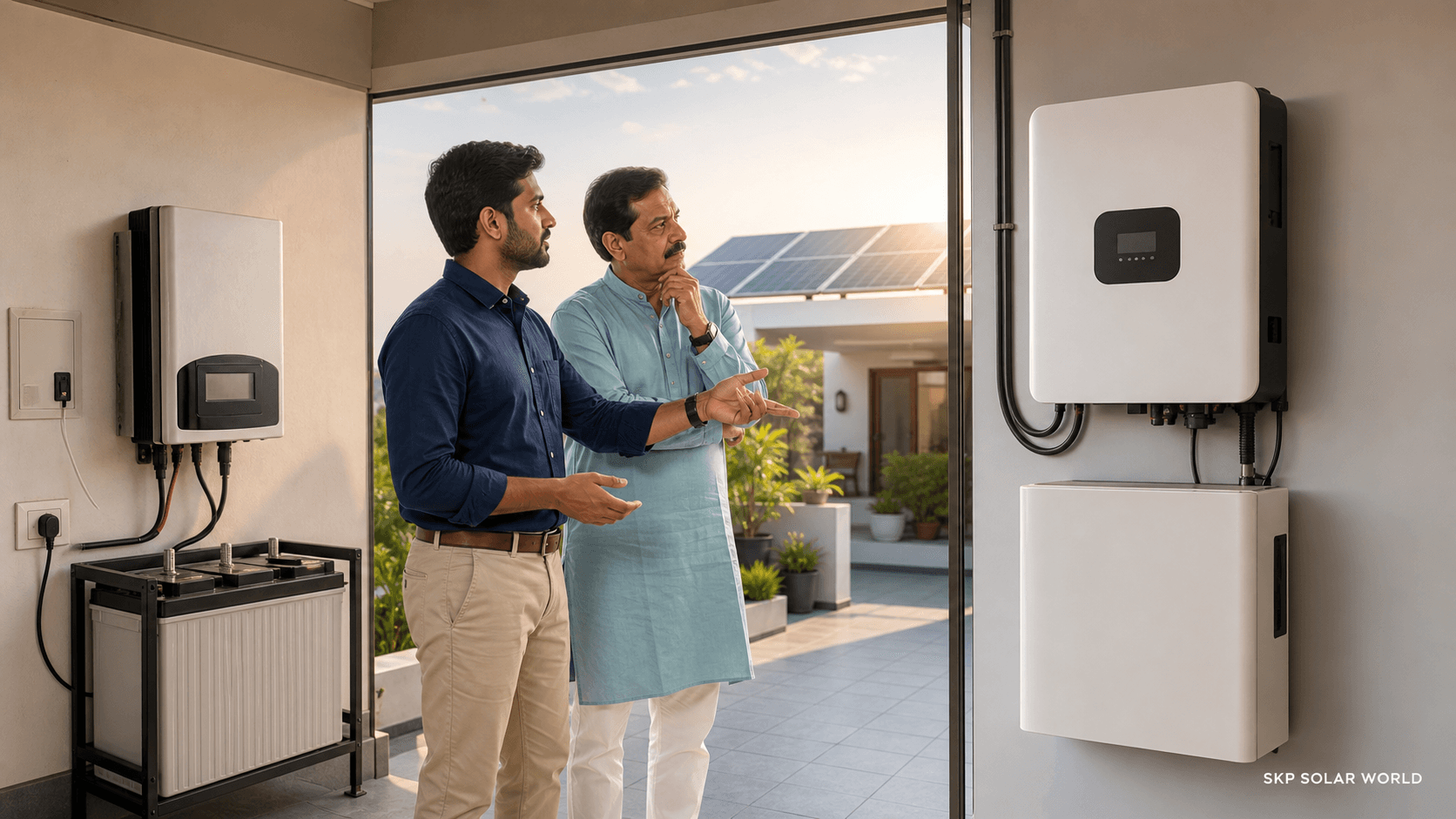 Residential Solar
Solar With Battery Backup vs a Traditional Home Inverter in India: What Actually Pays Off
A solar system with battery backup replaces the electricity itself, generating and storing your own power during the day for use after sunset or during an outage, while a traditional inverter only stores grid electricity you have already paid for.
Read Article